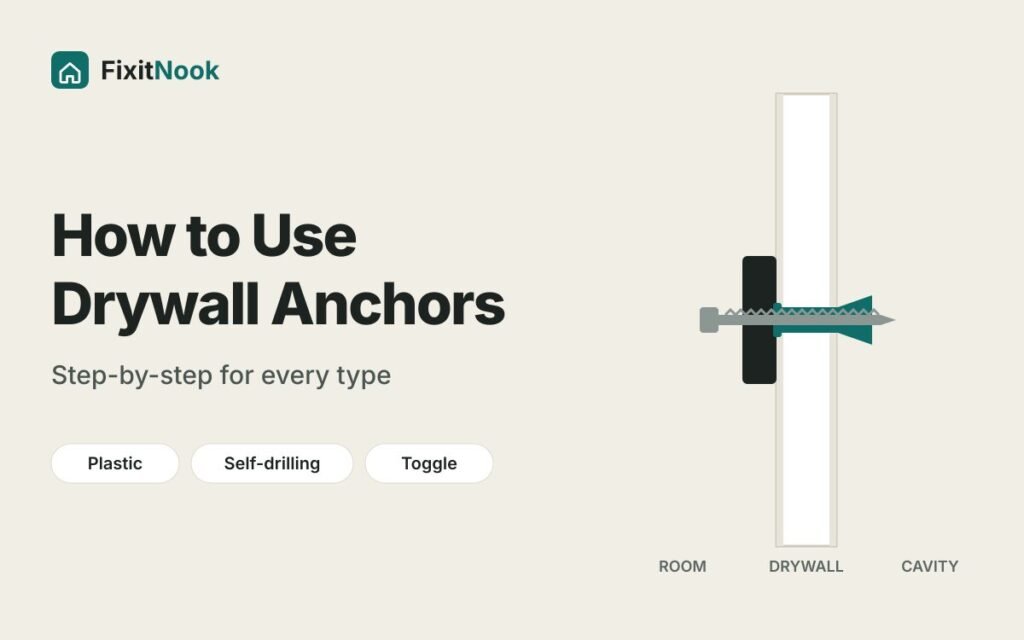
Check for a stud first. If there isn’t one, choose an anchor rated for your item’s weight, drill the pilot hole size printed on the package (self-drilling anchors need none), tap or screw the anchor in until it sits flush with the wall, then drive the screw through your item into the anchor until it’s snug. Don’t overtighten.
Drywall is basically compressed gypsum between two sheets of paper. A plain screw has almost nothing to bite into, so anything heavier than a small picture eventually pulls out. A drywall anchor fixes that by expanding, threading or clamping behind the wall so the load spreads over a bigger area.
This guide covers how to pick the right anchor and how to install the three types you’ll use most: plastic expansion anchors, self-drilling anchors and toggle bolts.
What you’ll need
- Drywall anchors rated for the weight you’re hanging (plus the screws that come with them)
- A drill and a drill bit in the size printed on the anchor package
- A screwdriver or drill driver
- A stud finder (optional, but it saves holes)
- A pencil, tape measure and level
- A hammer or rubber mallet for tapping anchors in
Step 1: Check for a stud first
A screw driven into a wooden stud holds more than any hollow-wall anchor, so always look for one before you reach for an anchor. Run a stud finder across the wall, or knock and listen: a hollow sound means empty wall, a duller sound usually means a stud. Studs in most US homes sit about 16 inches apart, center to center.
If your mark lands on a stud, skip the anchor and drive a wood screw straight into it. If it doesn’t, carry on below.
Safety first: before drilling, check that no electrical wires or pipes run behind the spot. They often run straight up and down from outlets and switches, or straight across between them. If in doubt, move your hole a few inches or use a detector that senses live wires.
Step 2: Pick the right anchor for the weight
The most important number is the weight rating printed on the package. Ratings vary a lot by brand and size, so treat the ranges below as a rough guide and always go by your package.
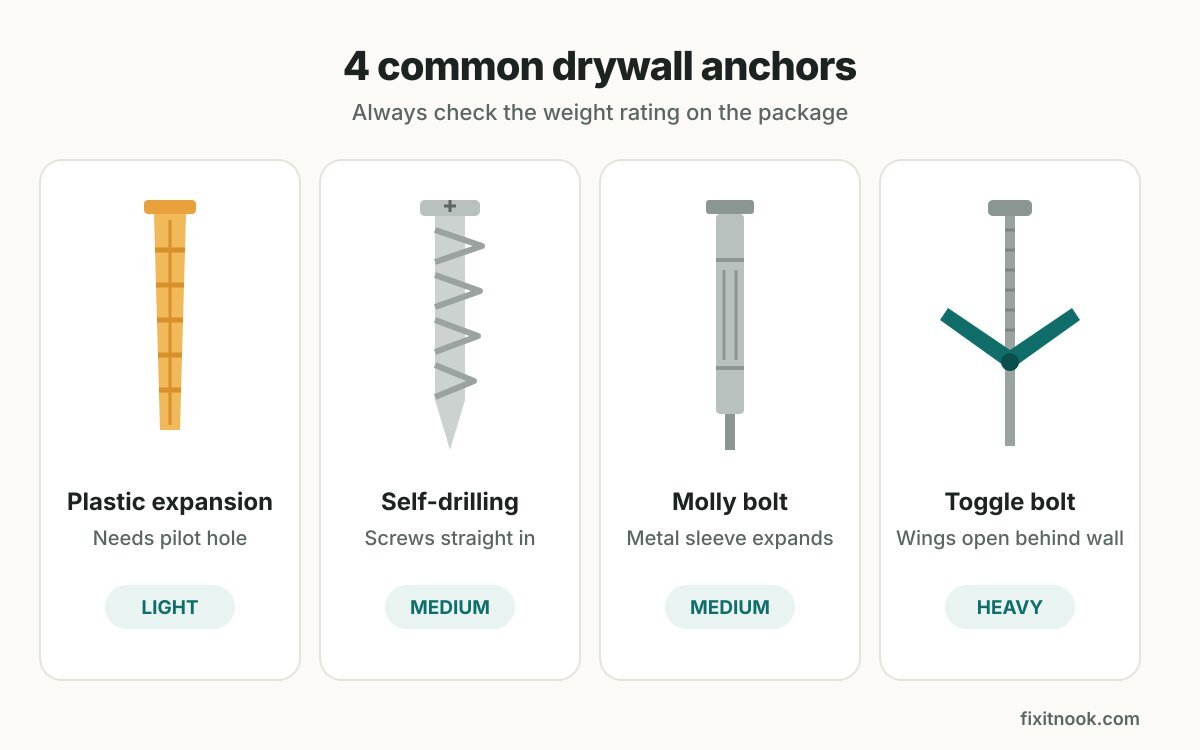
| Anchor type | Typical load (approx.) | Good for |
|---|---|---|
| Plastic expansion (ribbed) anchor | Light: roughly 10–25 lb | Small frames, light hooks, smoke detectors |
| Self-drilling (threaded) anchor | Medium: roughly 25–75 lb, by brand | Towel bars, curtain rods, mirrors |
| Molly bolt (metal sleeve) | Medium: roughly 25–50+ lb | Shelves, heavier mirrors |
| Toggle bolt / strap toggle | Heavy: 50–100+ lb, some much more | Shelving, heavy mirrors, cabinets |
Two rules of thumb: stay well under the rated load, and spread heavy items across two or more anchors. A strong anchor can still tear the drywall around it if the load is too high.
How to install a plastic expansion anchor
These are the small ribbed plastic sleeves that come free with most shelves and hooks.
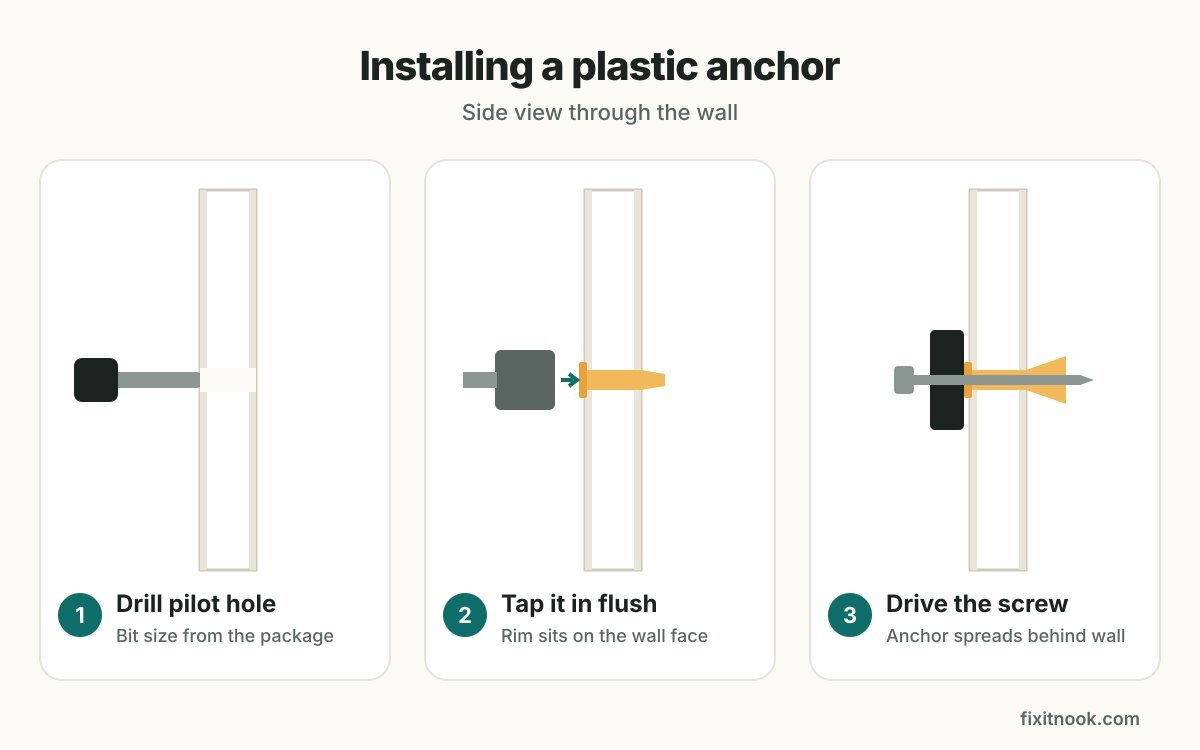
- Mark the spot. Measure, check with a level and mark where the screw will go.
- Drill the pilot hole. Use the bit size on the package. If there’s no size, hold bits against the anchor and pick one slightly narrower than its body. Drill straight in and don’t wiggle the bit, or the hole gets too big.
- Tap the anchor in. Push it into the hole and tap it with a hammer until the rim sits flush with the wall. It should be snug. If it slides in loosely, the hole is too big.
- Drive the screw. Hold your item in place and drive the screw through it into the anchor. The anchor expands behind the wall as the screw goes in. Stop as soon as it feels snug.
How to install a self-drilling anchor
Self-drilling anchors have a sharp tip and wide threads, so you can screw them straight into drywall without drilling first.
- Mark the spot and make a small starter dent with a nail or the tip of a screwdriver.
- Screw the anchor in. Use a Phillips screwdriver or a drill on a low speed and low clutch setting. Push firmly and turn until the head sits flush. Stop there, because overdriving strips the drywall.
- Attach your item. Drive the screw through your item into the anchor until snug.
How to install a toggle bolt
Toggle bolts have wings that open behind the wall, so they spread the load wide. Use them for heavier items.
- Thread the item on first. For a classic spring toggle, push the bolt through your bracket, then screw the wings onto the bolt, because you can’t remove the bolt later without losing the wings inside the wall.
- Drill a larger hole. Toggles need a much bigger hole than plastic anchors. Use the size on the package, just wide enough for the folded wings.
- Push it through. Fold the wings, push them through the hole and let them spring open behind the wall.
- Tighten. Pull the bolt toward you so the wings press against the back of the drywall, then tighten until the bracket is snug against the wall.
Strap toggles (often sold under brand names like Snaptoggle) are easier to use: the channel stays in the wall, so you can remove and refit the screw.
Pro tip: Stick a small square of painter’s tape over your mark before drilling. It stops the paper face of the drywall from tearing, keeps your pencil mark visible and catches some of the dust. Wrap a second piece of tape around the drill bit at the anchor’s length so you know exactly when to stop drilling.
Common mistakes to avoid
- Drilling too big a hole. The anchor spins and never grips. Start with a smaller bit if unsure.
- Overtightening. This strips the anchor or crushes the drywall. Stop as soon as the screw is snug.
- Ignoring the weight rating. Pick an anchor rated well above your item’s weight, and use more than one for heavy loads.
- Using the wrong screw. Use the screw supplied with the anchor or the size the package recommends.
- Skipping the stud check. If there’s a stud, use it.
When to call a pro
For wall-mounted TVs, heavy kitchen cabinets, grab bars or anything above a bed or crib, fix into studs or blocking, not anchors alone. If you can’t find studs where you need them, ask a handyman.
FAQ
How much weight can a drywall anchor hold?
It depends on the type and brand. Small plastic anchors are for light loads, while toggle bolts are made for much heavier items. Check the rating on the package and stay well below it.
Do I need to drill a pilot hole for drywall anchors?
Most anchors need one, including plastic expansion anchors, molly bolts and toggle bolts. Self-drilling anchors don’t: you screw them straight into the drywall.
Can I reuse a drywall anchor?
Usually not. Plastic expansion anchors split when the screw goes in. Metal self-drilling anchors and strap toggles can often take a screw again if they weren’t overtightened.
What if my anchor keeps spinning?
The hole is too big or the drywall around it is damaged. Remove the anchor, patch the hole, and reinstall a slightly larger anchor or a toggle a short distance away.
Do I need an anchor if I hit a stud?
No. Screw straight into the stud. It holds more than a drywall anchor.
Hanging something else? Browse all our Walls & Paint guides.